Article
/ 3 September 2026
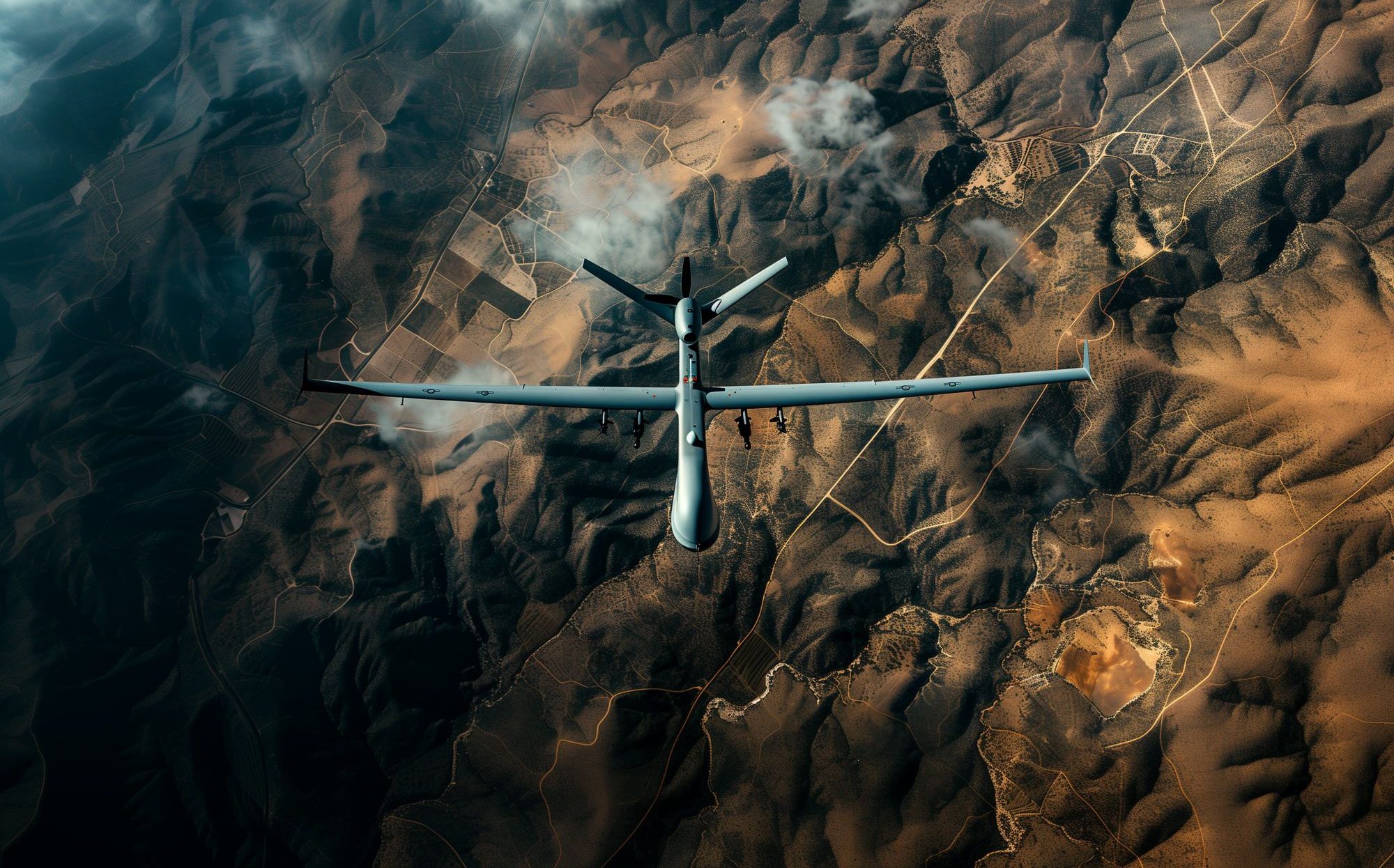
Qualification is complete. Electrical continuity is perfect. EMC testing has been signed off. Yet several hours into flight testing, intermittent Ethernet dropouts begin to appear.
The software team can’t reproduce the fault. The wiring harness checks out. Sensors are replaced. Power supplies are investigated. Eventually, attention turns to the connector.
For engineers developing UAVs, autonomous vehicles and rugged electronic systems, this scenario is all too familiar. Intermittent electrical faults are among the most time-consuming problems to diagnose because they rarely present themselves under controlled laboratory conditions. Instead, they often emerge only after prolonged exposure to the operating environment.
Understanding how vibration affects connector performance, and why recognised standards such as MIL-STD-810H are an important part of connector selection, can significantly reduce development risk before a design reaches production.
Why vibration creates intermittent failures
Unlike a single shock event, continuous vibration rarely causes an immediate failure. Instead, it accelerates the mechanisms that gradually reduce the reliability of the electrical interface.
During operation, microscopic movement can occur between mating contacts. Although almost imperceptible, this repeated movement can wear contact plating, promote fretting corrosion and oxidation, and gradually increase contact resistance. As these effects accumulate, signal integrity begins to deteriorate.
The result is often a connector that performs perfectly during bench testing but develops intermittent faults once installed on a vibrating platform.
Typical symptoms include:
The challenge is not simply to design a connector that survives vibration, but one that minimises the mechanisms that allow vibration-related failures to develop in the first place.
Several design characteristics play an important role.
A secure locking mechanism helps prevent unwanted movement between mating halves throughout the operational life of the equipment.
Effective contact retention ensures contacts remain correctly positioned despite continuous cyclic loading.
Stable contact geometry reduces relative movement between mating contacts, helping to minimise wear and the onset of fretting corrosion.
Material selection and surface finishes influence long-term contact resistance, while environmental sealing protects the electrical interface from moisture and contaminants that can accelerate degradation.
Individually these design decisions may appear small. Together, they determine whether a connector continues to deliver reliable electrical performance after thousands, or millions, of vibration cycles.
As engineers know, the best vibration-related failures are ones that never occur in service.
Why MIL-STD-810H matters
Modern UAVs, autonomous vehicles and rugged electronic systems continue to push for reduced size, weight, power and cost (SWaP-C). Connectors are expected to become smaller, lighter and more cost-effective without compromising the reliability demanded by harsh operating environments.
Reducing mass improves payloads capacity, packaging flexibility and manufacturing efficiency, but these benefits are only realised if long-term electrical performance is maintained throughout the life of the platform.
This is where recognised environmental qualification becomes valuable.
Rather than relying solely on design calculations or manufacturer claims, MIL-STD-810H vibration testing provides objective evidence that a connector has been validated under representative vibration conditions before entering service. While no laboratory test can perfectly replicate every application, qualification to a recognised standard gives engineers greater confidence that an interconnect has been designed to withstand demanding operating environments.
In other words, MIL-STD-810H should not simply be viewed as another specification on a datasheet. It is a practical way of reducing engineering risk during connector selection.
Delivering SWaP-C without compromise
As UAV programmes evolve from prototype development to high-volume production, connector selection becomes about more than electrical performance alone. Engineers increasingly need solutions that combine proven environmental robustness with the SWaP-C characteristics demanded by modern platforms.
 The WaSP connector range was developed specifically to address this challenge. Derived from the proven TERRAPIN SCE2 platform, WaSP has been optimised for high-volume applications where reducing size, weight and cost is essential, while maintaining the environmental performance expected in demanding defence and aerospace applications.
Its lightweight aluminium shell, simplified geometry, quarter turn locking mechanism, IP67 sealing and qualification to MIL-STD-810H Category 9 helicopter vibration demonstrate that SWaP-C optimisation does not have to come at the expense of rugged reliability.
Rather than asking engineers to choose between lightweight construction and environmental performance, WaSP has been engineered to deliver both.
Looking beyond the specification sheet
Connector selection is rarely driven by a single specification. Current rating, shell size and cost all influence the decision, but long-term reliability often depends on how an interconnect performs once installed in its operating environment.
Understanding the mechanisms that cause vibration-related failures and selecting connectors that have been designed to minimise those mechanisms and validated through recognised environmental testing, can significantly reduce development risk before products reach the field.
For engineers developing UAVs, autonomous systems and rugged electronic equipment, MIL-STD-810H vibration testing provides more than a qualification standard. It provides confidence that the connector has been engineered and validated for the environments in which it is expected to perform.
To learn more about the WaSP connector range and discuss your application with our engineering team, get in touch with Amphenol LTD today.