Article
/ 14 July 2026

In vehicle-mounted and body-worn systems specifically, connectors are routinely subjected to rapid connection and disconnection, often in constrained spaces. With limited dexterity and dynamic loading during movement or dismount, connector behaviour during separation is not just a usability consideration, it becomes a system reliability concern and a safety issue too.
In defence applications, electrical systems often interface between vehicle power and data networks, soldier-worn equipment, and mission-critical subsystems.
Typical entry, exit or repositioning can often cause any of the following:
Traditional connector designs are not optimised for these events, which is why magnetic breakaway connectors are so crucial for system and mission integrity.
Breakaway connectors avoid damage to connectors and cable assemblies and avoid contact degradation from repeated uncontrolled separation. There’s also a safety concern to consider, with difficult breakaway putting personnel and hardware at risk of arcing or transient electrical effects, as well as delaying dismount.
Designing a connector that remains secure during normal operation but separates predictably under abnormal load remains a difficult engineering problem, but one that we believe can be solved with our range of breakaway connectors.
Magnetic breakaway connectors offer clear and distinct advantages, including:
However, many magnetic connectors are designed primarily for ease of use, and not controlled electrical behaviour under load. This conventional approach, while convenient, doesn’t take into account the power and data requirements of modern day mission requirements.
Engineers will typically rely on cable routing and strain relief, retained or locking connectors, or simply accepting that cables and connectors are sacrificial. While these approaches help, they don’t define what actually happens when something snags.
Challenges will always exist in modern systems and operational environments, but connector behaviour can be influenced by factors that are difficult to predict or fully replicate in testing – particularly as mission critical environments change and evolve. In simple terms, connector performance observed in controlled test conditions may not fully reflect behaviour in service.
Our real-world research so far has demonstrated some common themes:
The answer: Breakaway connectors with real-world functionality
The Stingray connector series has been developed for defence and high-reliability applications, particularly where connectors are integrated into:
It is specifically intended for environments where connectors are exposed to repeated movement, handling, and abnormal loading during use.
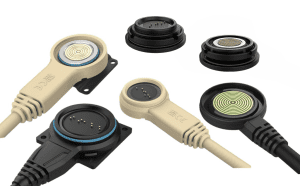
These features support:
While Stingray provides robust magnetic coupling and mechanical breakaway behaviour, controlled electrical separation under load is an active area of development.
Our engineering team are currently working on the management of contact behaviour during live disconnection and reducing electrical stress and transient effects.
The initial goal is to improve repeatability of separation characteristics during disconnection during vehicle exit, while improving overall system reliability and safety. Our overall goal is to introduce predictable failure behaviour on repeated disconnections.
Magnetic breakaway electrical connectors are commonly evaluated for:
A magnetic breakaway solution may be appropriate where systems involve:
If you are working on a defence or ruggedised system where connector behaviour under load is a concern, it is worth addressing early in the design process.
We are actively working with engineering teams to broaden our understanding of dismount and snagging scenarios and how vehicles and wearable systems may present constraints.
We would also like to understand any specific requirements you may have around controlled separation under load.